
My Fathers Plan provides job training, tutoring, sports, mental health support, community activities using revenue model
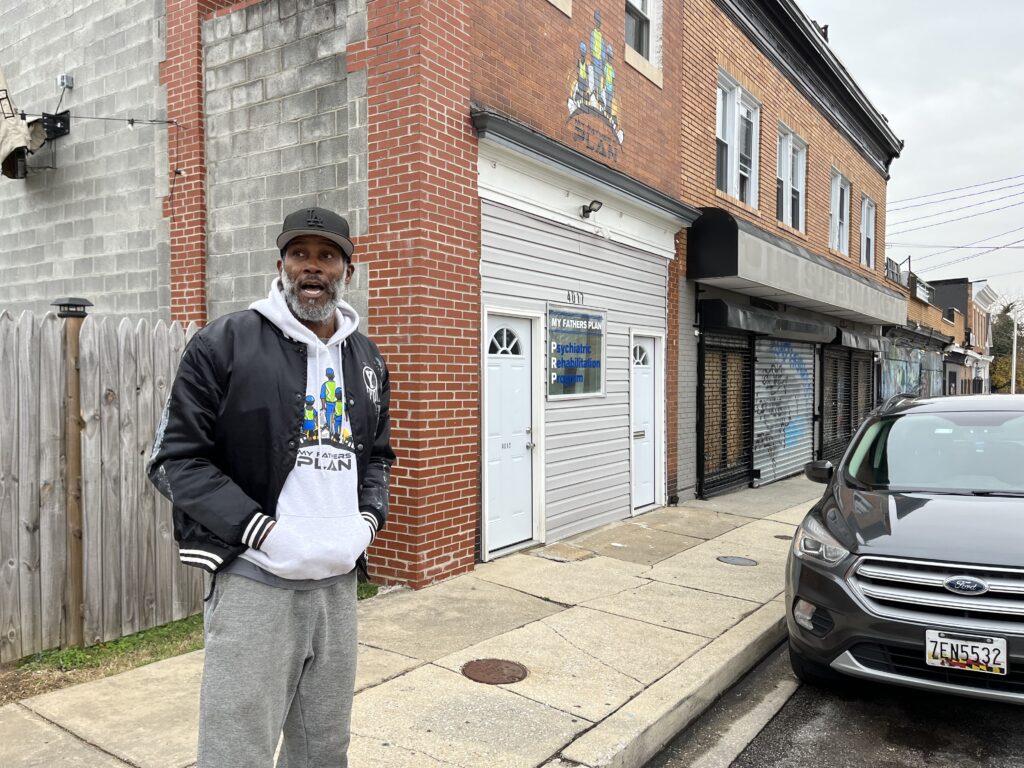
Dawood Thomas is a 52-year-old Pen Lucy resident who has the heart of a hustler and the eyes of an entrepreneur.
In years past he used those traits, in his words, as “a criminal,” dealing drugs on the streets of Baltimore. Today he is using them to build a nonprofit organization on Old York Road that aims to “equip youth with essential life skills and opportunities for growth.”
Thomas and his staff currently work with hundreds of young people throughout the city each year. What sets them apart is not just what they do, but their approach–focusing on how to motivate participants, looking for innovative ways to deliver services and emphasizing what Thomas calls the “economic component.”
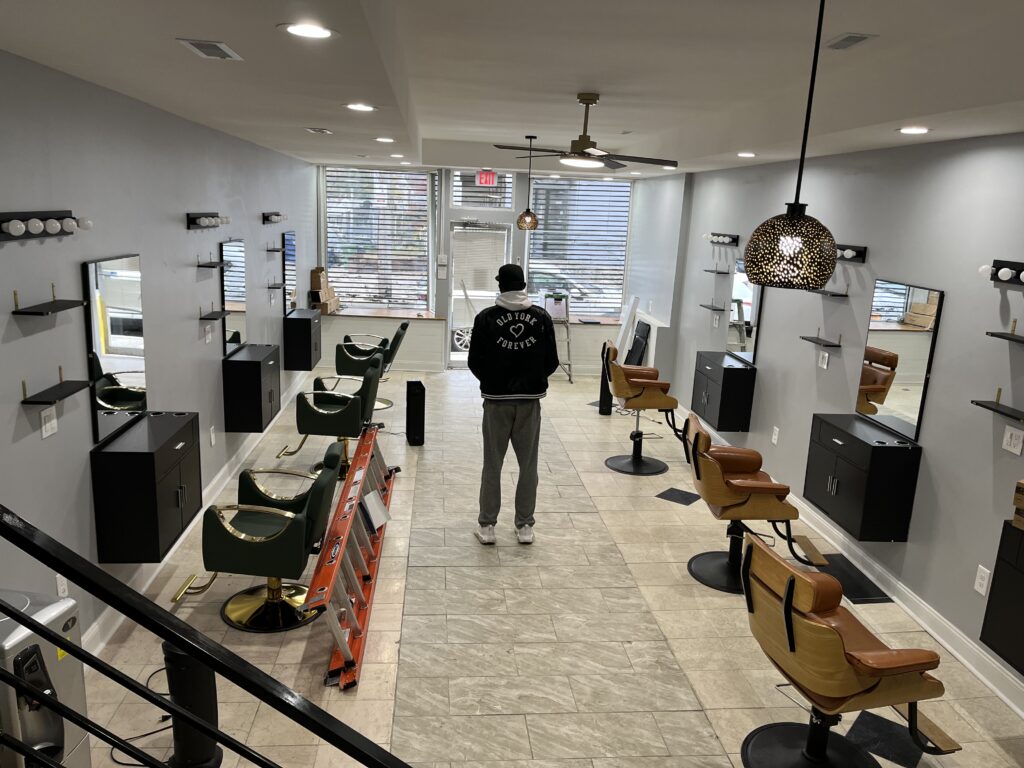
Job skills training, peer-to-peer tutoring, basketball leagues, mental health support and community activities like a jazz concert series are among the range of services offered to both boys and girls. These programs are built upon a foundation of revenue generating activities that have allowed Thomas to acquire real estate assets, including a building that will soon house an apprenticeship program for hair stylists and barbers.
Thomas’s organization is called “My Fathers Plan” or MFP. The name is a nod to Thomas’s dad, who was known in the sports pages of The Sun as “Big Charley Thomas.” He was a 6-foot-8-inch center who dominated on the hardwood for the powerhouse Dunbar High School teams of the mid-1960s. A black-and-white photo of Dunbar’s No. 21, palming a basketball in each hand, hangs in MFP’s main meeting room.
Charles Thomas had a vision for a way to break the cycle of violence and crime on the streets of Baltimore. But he got caught up in the drug culture and passed away at age 42, when Dawood (pronounced dah-waad) was 18.
The elder Thomas had talked about the idea of a citywide boys’ club that would allow members from different neighborhoods to get to know each other. “He envisioned a brotherhood that would decrease the need to feel threatened by another Black man on sight,” says his son.
“My father was in and out of drug addiction,” Thomas says. “But when he was clean, he probably was the smartest person I’ve ever met in my life, even to now, because he was just so fluent with information. He just knew about so many topics.”
The year after his father’s passing, Thomas had his own close call with death. Directly across the street from where MFP operates, he was wounded in a terrifying drive-by shooting that police described as drug-related.
“Two men were shot to death last night and six other people, including two females, were wounded when the occupants of a passing black van opened fire with semiautomatic weapons on a group of people standing outside a carryout in Baltimore’s Govans section,” according to the Sun’s reporting. Witnesses said they heard 30 shots before the van sped away.
MFP now owns the property where the shooting occurred.
Thomas earned an associate’s degree from Baltimore City Community College, where he followed his father’s example as a basketball star and helped his team to a statewide championship in 1995.
The criminal life suited Thomas for a while, in part because he was always working at other jobs. “I wasn’t like a full-time criminal,” he says. “And because I was always able to relate to people, you know, I was a different kind of criminal. If you met me, you wouldn’t know. You would only know if you knew.”
It would take until 2006 and a series of life events, including the births of two daughters, before Thomas would finally decide to give up the street life. After an arrest, he found himself sitting behind bars for three days, “the longest I’ve ever been in jail,” because he couldn’t make bail.
As he sat there reflecting at Central Booking, he decided to strike a bargain with God. “I had escaped so many situations where I should have went to jail, or I should have died,” he says. “And I remember thinking, ‘God, I know I always say this, but if you keep me out of this one, I’m done.’”
Thomas came to the conclusion that “God saved me for a reason, and if I keep doing this, I’m never gonna reach my full potential because he ain’t going to let me. He’ll let me have fun for a little while and then he’s going to smack me up.”
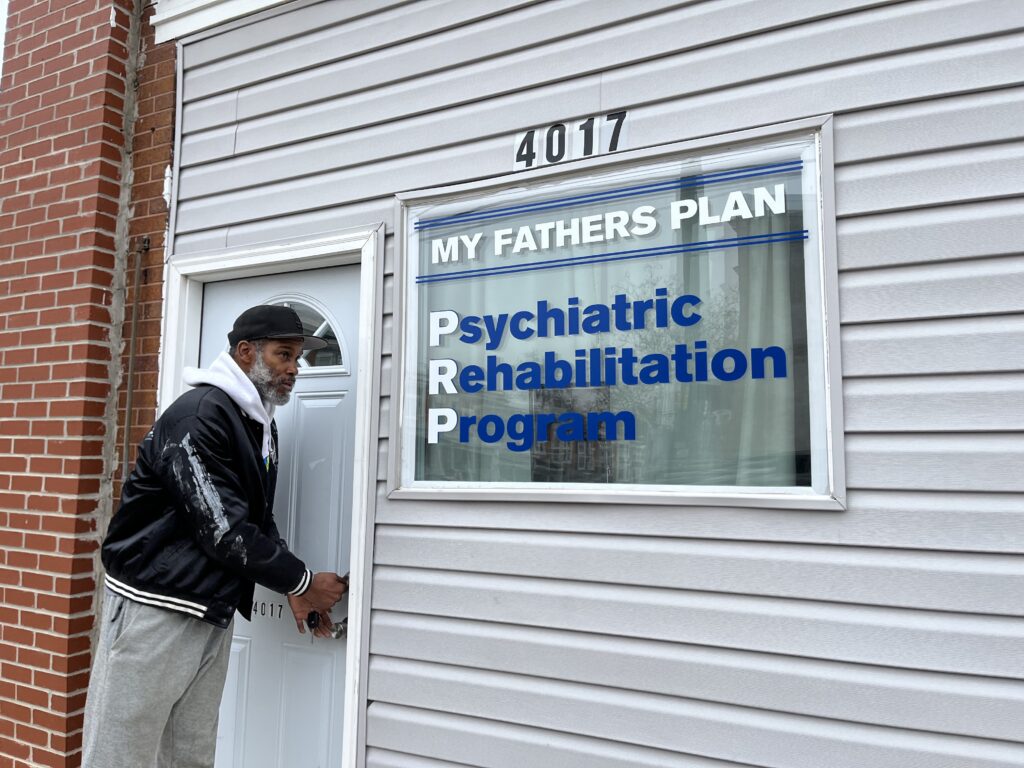
At the age of 33, Thomas decided to go straight, struggling for the next couple of years with how to become “a civilian.” While working as a counselor in local schools and other settings, he found himself reduced to dealing with the everyday challenges that people with limited incomes must face.
“I just wasn’t used to that. I wasn’t used to catching the bus, you know, with my daughter, going to school, whatever. I just wasn’t used to that. I wasn’t used to going to the market, budgeting money, you know, having a market list.”
But he recalled the words of his late father. “My dad said, ‘You got to start a business in the community, and then you use proceeds from that business, a percentage of the proceeds, and you give back to the community.’”
While working as a school counselor, he and Teione Carroll, MFP’s director, decided to open a clothing boutique in Pen Lucy as a side hustle. They called their business “The Store at Your Door,” because it would make home deliveries. It operated out of the building that is now My Fathers Plan. Thomas lived upstairs with his daughters.
My Fathers Plan “wasn’t an actual plan,” Thomas says. “It just kind of happened, right?”
MFP got its start when boys from the neighborhood came into the store, asking for money.
“I used to be hard on them, like, ‘Hell, I’m not giving you no money. You 10 years old. Why you begging?’” Thomas says.
One day a boy showed up and asked if there was a way to earn some money. Thomas gave him a job picking up trash in front of the store. “He was 10. I gave him $2, and he came back the next day with his twin brother.”
From there the situation snowballed, with more boys showing up to work each day and getting progressively bigger assignments, as well as snacks that Thomas began keeping in his store. Eventually Thomas organized regular neighborhood cleanups with as many as 15 boys, ranging in age from 9 to 11.
Residents started noticing, even waiting with food and bottled water for the youthful work crews as they came down the street.
Thomas and Carroll realized that they had created something, something that needed a name. “We didn’t know what to call it,” Thomas says.
After spitballing a couple of options, “I remember saying, ‘Man, look, all this … is my father’s plan. And when I said ‘My Fathers Plan, MFP,’ I said, let’s call it that. Let’s call it MFP. It’s catchy. MFP is good.’”
For a few years MFP continued as a neighborhood operation while Thomas struggled to get grant funding to grow. Finally he realized that the pursuit of philanthropic support was a dead end, because funders didn’t believe that MFP could be “sustainable.”
“I remember not knowing what that word meant. You know, the first two times I heard it, I didn’t know what it meant, and I really didn’t care to research it.”
The third time he heard it, he looked it up and got angry. “I said, ‘Well, how am I supposed to be sustainable if y’all don’t help me get off the ground, right? So then I took it personal.”
Drawing on his experience as a hustler, Thomas summoned the “same cocky bravado“ that he used when he was working the streets. “I took the mindset of, well, when I was a criminal,” Thomas says. “At the time my mindset was, you know, nobody can stop me. I can make money regardless, no matter what you say.”
He decided to build on what he had done in cleaning up the streets of Pen Lucy and offer the same services in other parts of the city. Using his past criminal connections, Thomas secured “safe passage” on the streets where he and his young crew would work.
“I would talk to certain guys that I knew. These are criminals, though. These are not community people, because these are the guys who will say, ‘Leave them alone–they’re cool,’” Thomas says.
“People would give us $100 a block, whatever block we went to,” he says. “I started a social media page, and I would post it, and then it just kind of caught. People started calling me and texting me, ‘Can you come to my block?’”
Today the cleanup business is just one of several that MRP operates to generate revenue while providing paid work opportunities for program participants. “We have a moving and hauling company. We have a transportation company,” which provides shuttle services for groups, Thomas says. “That’s why we can pay kids all year round to work, because we always got money coming in.”
Paid compensation is the key to MFP’s success in keeping its participants engaged, Thomas says. His goal is to give them the respect they deserve and the resources they need as a way of creating accountability. “The goal is to create new norms.”
He or Carroll interviews all prospective participants. “When I meet a kid, I give him everything he says he needs,” Thomas says. “I say, ‘Here’s everything, right now, so you don’t got no excuses.”
Most boys and girls who start with MFP remain with the program for years, sometimes even after they graduate from high school.
“My Fathers Plan was never about me making money,” Thomas says. “It was always about me making money for them, like showing them, ‘Yo, you can make money without being a criminal.’ Mind you, I was a criminal when I was 15 or 16 because I wanted money. So I’m like–well, I’m going to help them make money in my neighborhood so that they won’t end up on the corners.”
That’s the idea behind MFP’s newest endeavor, what Thomas is calling the CEO Academy.
“We’re going to have an apprenticeship program where kids is going to be barbers and hairdressers,” he says. “My idea is to have a 17-year-old kid cutting the hair of a 10-year-old kid, right? Because that 10-year-old kid is gonna relate to that much more than if it’s me or you. We can say some stuff, but he’s 10, you know. So we’re trying to just plant seeds.”
Thomas currently has his eye on 4518 York Road, a graffiti-scarred building at the corner of Old Cold Spring Lane. The city owns the property and has offered to make it available for community use. Some people would like to see it torn down, but Thomas has other ideas.
He would like to see it renovated into a breakfast and coffee shop that would provide jobs and training to neighborhood youth. It would be named Helen’s Kitchen, after Carroll’s grandmother. “Helen is a real person,” Thomas says. “She lived in Pen Lucy, and she was what you call a community staple.”
The building was once a fast-food restaurant, and some residents say they were traumatized by the way they were treated there. “We’ve got to create something that can impact everybody, not just economically, but trauma, the trauma,” he says. Knowing that the place has become a kind of memorial to a Pen Lucy grandmother could make people think differently about the place, Thomas says.
“We want to make it friendly to our seniors. We want our seniors to be able to come and meet up and, you know, go for that walk around that Guilford thing and come get a coffee.”
If Thomas pulls that off, it will be a step toward “closing the zipper,” a long-held goal of community activists to connect the neighborhoods on either side of the York Road Corridor that have been separated for decades by income and racial disparities.
Whether MFP is able to expand into other neighborhoods or not, Thomas thinks that his organization can be a kind of blueprint for ways that communities can improve their environment, engage their young people and reduce crime.
The Pen Lucy of 15 years ago was known for drugs and violence. “In 2010, if you come up here on any random day, you might see 25 drug dealers moving around,” Thomas says. “Now you might see five guys.”
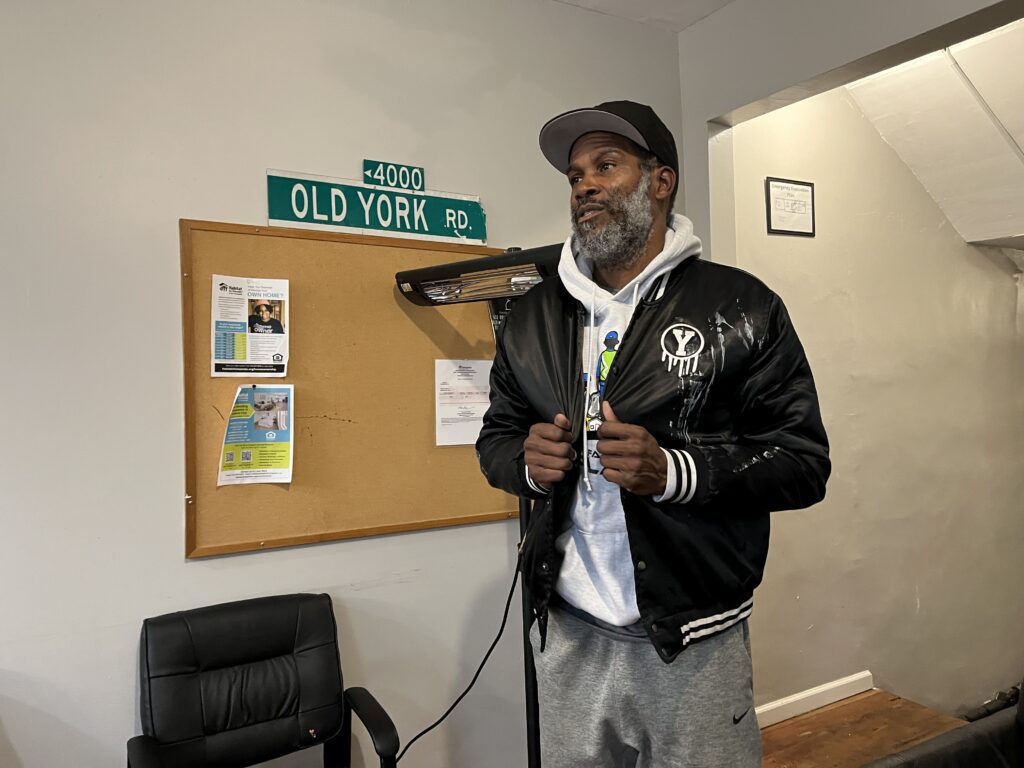
Similarly “Pen Lucy used to be known for murder. Pen Lucy is not known for murder no more,” Thomas says.
He does not take all the credit, acknowledging that some dealers have died and that others have gone to prison. He also knows that some of the dealers working Pen Lucy went through his program and still chose to be criminals.
But he is confident that the work he has done, in little things like putting trash cans on the street and in big things like creating a sense of purpose and giving young people alternatives for what to do with their time, has made a difference.
“My job is just to constantly push new norms for the next group,” Thomas says. “When I think about where Pen Lucy came from, and where we going, … this neighborhood has changed so much.”