Studio boasts 17 instructors, 200 students and growing public school presence
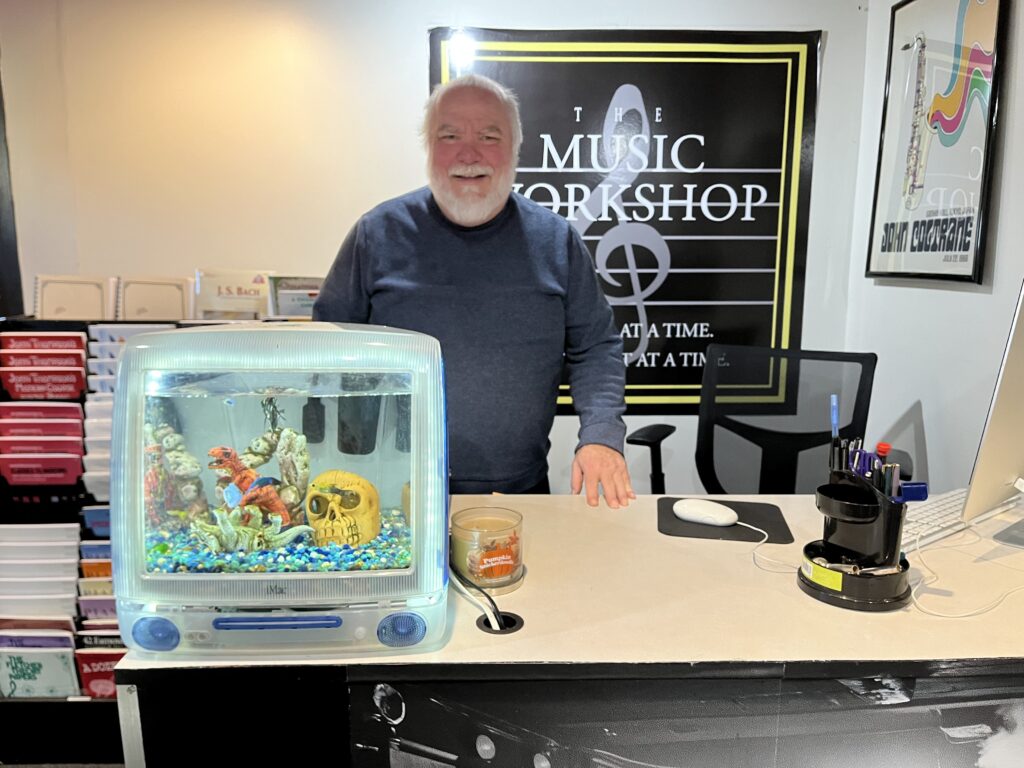
When Jim Jones started The Music Workshop in 1993, he was in a bit of a panic.
He was an honors graduate of the prestigious Berklee College of Music, but as he describes it, “I literally had, you know, no money, no job, a pregnant wife, and I was living on top of my mother’s house.”
He realized that he needed a regular paycheck, but as a musician he didn’t have much of a workplace resume. “All I ever did was play music,” he says. “I was desperate.”
That’s when he saw an ad to sublet some space from a store on York Road. The rent was cheap, but the plan didn’t quite work out–the man who ran the store was behind on his rent and about to get evicted.
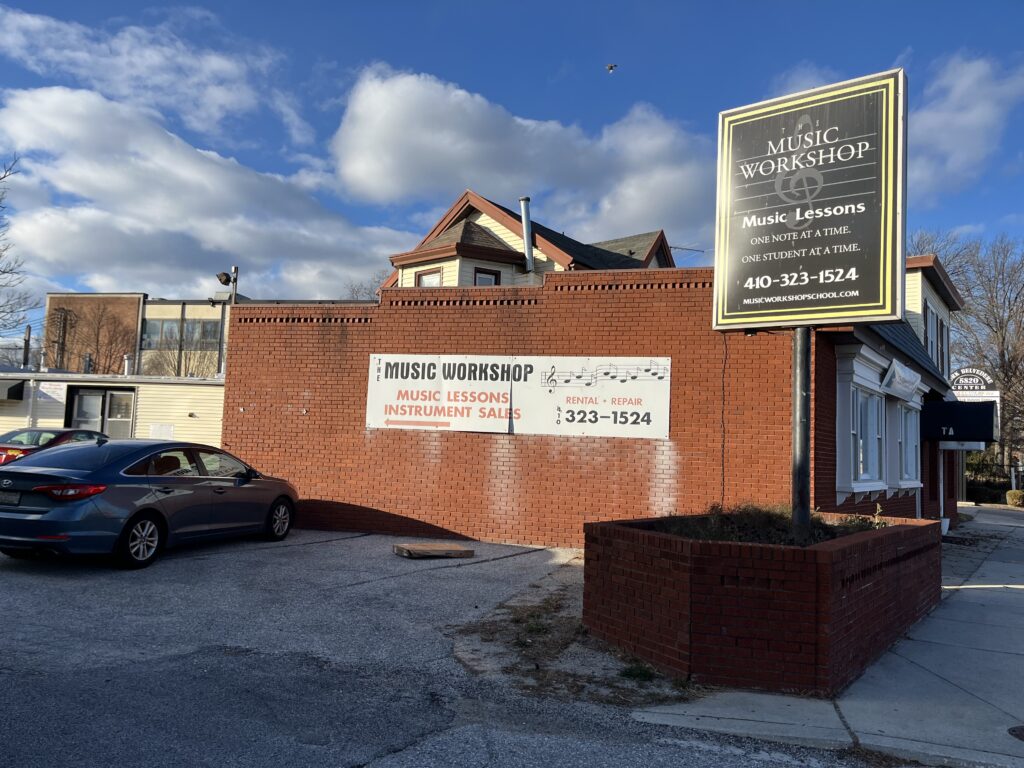
What did work out, however, was that the landlord needed an actual paying tenant, and signed Jones to the space. From there it’s been, as the sign says outside, “One Note at a Time. One Student at a Time.”
Today, 32 years on, the Music Workshop at 5810 York Road has expanded into eight lesson rooms and boasts a roster of 17 studio instructors, an enrollment of about 200 students and a growing presence in local public schools, where Jones’s instructors offer lessons to several thousand young musicians.
The school program is “actually growing exponentially,” he says. “Between the in-house people giving private lessons and the people doing the outside classes, I’ve got close to 30 teachers.”
Over the years change has come in various ways. As rock ‘n’ roll has aged, the interest in learning to play guitar has waned, Jones says, while more students are now looking to develop their skill in music production. He’s even added a special room to accommodate this trend.
“The way they make music that the kids are listening to today, you sit in front of a computer and manipulate loops and then you rap, or you sing or whatever you want to do,” Jones says. “So basically to produce music these days all you need is a laptop.”
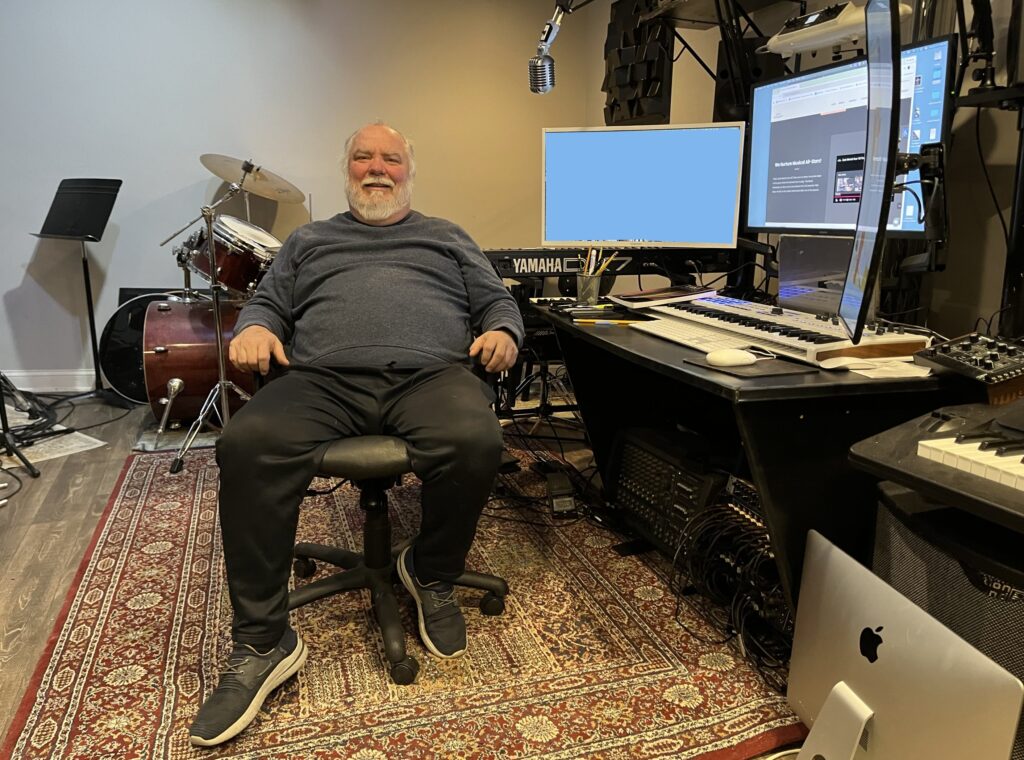
His music production room features workstations that “have an Apple computer and a keyboard and an interface,” Jones says. The computers are equipped with different software platforms called DAWs, an acronym that stands for digital audio workstations. Students “learn how to produce music on the major DAWs. All the major ones that everybody’s using are loaded up on the computers.”
Most students, however, are sticking with traditional instruments like piano and drums. “That kind of makes sense because the productions that you’re hearing today are very percussion-heavy. When you think about pop music, you don’t hear a lot of guitar anymore. There are a lot of synthesizers, a lot of percussion and a lot of vocals.”
In addition to training young musicians, the Music Workshop has an in-house recording and rehearsal studio that has been used by a variety of jazz, rock, R&B and Gospel artists. As in other fields, technology is playing an expanding role in music. “I love technology,” Jones says.
Even if it has lost some prominence, guitar is still an instrument that many students are pursuing. In terms of the most popular classes, “I’d say piano, guitar, drums and voice. They’re the top four,” Jones says.
He has a background in jazz, including a major in jazz composition and arranging. “As opposed to a lot of other schools, we’re a little bit more on the jazz side,” Jones says. “We do teach classical, especially for the beginners. It’s always a foundation. But, once they progress and get to a certain level, a lot of kids kind of gravitate towards blues and rock and jazz, and we kind of excel there.”
One of his students who’s gone onto national recognition is Zack Merrick, who plays bass in the multi-platinum pop-rock band All Time Low. “I’m usually on tour,” he says in an online promotional video. “But when I come back home, I come to the Music Workshop,” he adds. “It’s a great place. This is where I started learning, and I always come back.”
“He’s like my biggest success, but I’ve had scores of kids go on to music school: Peabody, Berklee, Miami, North Texas,” Jones says. “I’ve had a lot, a lot, a lot of kids that went on to be professional musicians.” They may not be big names, but they are “people like me, out there, doing it,” Jones says.
Bearded and affable, Jones is unassuming about his success in building a thriving business. “I have good people,” he says. “And I care. I’m the owner. I’m in here every day, and I care what happens in here.”
Word of mouth remains the Music Workshop’s most reliable form of marketing. “When you’ve been around three decades, it still brings in more than anything,” Jones says. “I have customers that took lessons when they were kids, and now they’re sending their kids here.”
Jones has been around long enough to have seen the neighborhood go through some ups and downs. He realizes that there are some people who are reluctant to venture further south than Northern Parkway. But he has never had a problem with crime and appreciates the way that York Road “is kind of on the cusp” between some high-income areas and some low-income ones. “Cities are like that.”
He is working to take advantage of the facade improvement program sponsored by the York Road Improvement District. Once he gets all the necessary approvals, he’s hoping to install a dynamic sign where he can “put cool little sayings and musical things out there.”
Jones is a Baltimore native who started getting serious about music as a student at Mount St. Joseph High School and later worked with Baltimore pianist Joe Ercole. He remains active as a performer and music director.
Jones plays in the classic rock band Fifty Bucks for Betty and is currently gearing up for the annual benefit concert put on by the Hank Entwisle Band and the Morgan State University Choir at the Joseph Meyerhoff Symphony Hall.
His standing in the music community has allowed him to attract some major figures to join his faculty. These include the drummer Eric Kennedy. “He’s a legend,” Jones says. “He plays all over the world.”
Another marquee name is Lafayette Gilchrist, whose music was heard on The Wire and who recently joined the Sun Ra Arkesta, where he’ll be performing on piano, the instrument played by the group’s founder, the legendary Herman “Sun Ra” Blount. “I’m fortunate to have them here,” Jones says. “I love having them here, and they’re my friends. I’ve known them for 20, 30 years.”
Top-notch teachers help Jones deal with one of the biggest challenges of the 21st century–the shortening of the American attention span, especially among young people. “Being an educator for 30 years, I have seen a drastic decline in attention span in children,” he says. “It’s not their fault–it’s just the environment and the society we live in.”
Bombarded by “10-second videos on TikTok” and attracted by free tutorials on YouTube, some students think they don’t need to keep up with lessons. “But there’s nothing like sitting in a room with Lafayette Gilchrist for a half hour a week, him imparting his wisdom on Bud Powell and Oscar Peterson,” Jones says. “You can’t get that from the internet.”